Thursday, 7 February 2013

Narrative and Character Analysis

NARRATIVE ANALYSIS

Title of Book: The Great Gatsby
Film Director: Jack Clayton  (1974), Baz Luhrmann (2013)
Book Genre: Modernist Novel, Jazzage, Novel of Manners, Romantic Tragedy
Main Character: Jay Gatsby
Secondary Characters: Daisy Buchanan, Tom Buchanan, Myrtle Wilson, George Wilson, Nick Carraway, Jordan Baker
Background Characters: Owl Eyes, Dr T.J.Eckleburg

What is the background of this book, why did the autor write it?

Ftzgerald wrote The Great Gatsby in order to reveal the hollowness of the rich and social class during the 1920's. He also addressed the 'impossible dream', which many people have been known to live in the past because they never accomplish dreams. He wanted to depict the social and moral values of the 20's. He wanted to express the greed and the empty persuit of pleasure. Although this is what everyone wanted at the time, he found it important to show that these things couldnt and didnt bring anyone happiness.

F.Scott Fitzgerald
My Brief Summary of the Plot:

The Beginning:

The novel is introduced with Nick Carraway as the narrator. He had moved to East Egg to live with his cousin, Daisy Buchanan and her husband, Tom Buchanan. Nick meets Gatsby, who is known for his lavish parties and his wealth. Nick discovers a lot through everyone, and it is him that tells the story. He knows that Myrtle and Tom are having an affair, that Gatsby is in love with Daisy, and meets Jordan who he is with throughout the majority of the novel. Gatsby and Daisy begin to realise their love for each other and feelings start to be rekindled and reunited, causing the main buil up for the rest of the novel.

The Middle:

Tom become suspicious of Gatsby and Daisy's affair. He tries to prove that Gatsby isn't who he seems. Daisy becomes enraged at Tom's behavior and tells him that she will leave him for Gatsby. However, she finds out the truth about Gatsby and his wealth, discovering he isnt who she though he was. She learns that he has a criminal background and all his money comes from bootlegging, so refuses to leave Tom. Daisy then drives home from the day out upset. She is behind the wheel of Gatsby's car and Gatsby is in the passengers seat. Driving upset and not concentrating, she hits Myrtle and kills her. 

The End:

George Wilson finds out about his wife having an affair. He asks around about the car that hit her, and eventually finds out its Gatsby's. (The car is bright yellow and extremely recognizable). When he discovers who the car belongs to, he then thinks that everything was Gatsby's fault, including the affair. He goes to Gatsby's house and shoots him, proceeding then to shoot himself. Only a select few attended Gatsby's funeral, including Nick. Daisy and Tom later move to Chicago and no one is left behind. Fitzgerald's point is proven - no one gets the American Dream.


Describe the Time Period:

The novel was set in 1922 - the era of Roaring Twenties, the post WW1 prosperous time in the United States. The time period had a divide in social and moral class.

Historical, Political and Economical Background:

1922 - An era of class hierarchy. Upper class and lower class had an extremely obvious divide. there was a big divide in NYC, the rich area and the poor area. There was also a strong selection of characters, from rich to poor, mysterious, criminal and outsiders. No one really fit in, but that was the point of the novel.
 

Describe the Location/Setting/Atmosphere:

There are three main places in the novel. East Egg, which represents the old aristocracy. West Egg, which represents the newly rich, the Valley of Ashes, which represents the social and moral decay and then New York City, where the quest is money. 

What is the Moral of the Story:

Fitzgerald wanted the moral of the story to be about dreams. The stroy throughout shows hunger for money and wealth, or love and happiness - a constant quest for what people cant always have. No character in the novel successfully gets what they want. He explained how each character failed to adapt to the life of the Egg, and wanted people to realise that they should be happy with what they have and stop looking for more. Things will come along if they are supposed to, but if you are constantly trying to force things to happen then you will always end up minserable, alone, or dead.

Important Themes of the Novel:

Love, Quest for Success, Justice, Personal Ambitions, Violence, The Past and Failure.

Personal Opinion:

The novel has a lot of interesting themes that are each built up but the characters. There are many symbolic things that are representative to the characters, which helps to build up and learn about them. However, there are some things I am not so keen on such as the simplicity to some of the characters appearance. This is why I have chosen Myrtle, because she seems to have a bit of an edge to her which will be really exciting to pull together for a shoot. She also links the idea of emotional change extremely well, with the drastic change in life and death that her characters experiences. She has a brutal story line like that of the main protagonist, Gatsby. The images could be made contemporary with a link almost to 'chavvy' and 'prostitution' styling and makeup. She almost makes me think of Alex Box's crazy makeup and colour choices (but not so creative) and Path McGraths catwalk that expresses an edgy, urban look, different to the norm. I also get reminded of Vivienne Westwood when I think of her styling, because the colours are clashing and patterned. However, not the idea of it being boyish.


CHARACTER ANALYSIS

Character Name: Myrtle Wilson.
Character Age: Mid 30's.
Voice: Sharp, more common, "impassioned".
Posture: "thickest figure", "faintly stout".
Walk: "carries herself sensuously", probably heavier footed - larger woman.
Distinguishing Marks: large eyes, broken nose at one point from when Tom punched her.
Physical Description: not beautiful but still attractive, "continually smouldering".
Occupation: Wife of a run down auto shop owner.
Interests, Hobbies, Talents: Becoming rich, gossiping.
Location: The Valley of Ashes.

Give a detailed description of the Location: The Valley of Ashes is between the rich and the poor areas near NYC. Its a run down, derelict area which is just a strip. It looks unloved and uncared for, described as dusty, smokey and almost Western like. Its associated with the lower working class poor people.

Describe the Styling: Colour clashes, corsets, fishnets. Tries to be upper class but doesnt do it right. Linked with the idea of 1920s actresses and prostitution.

How is your character different from you?
Myrtle is different from me because she doesnt appreciate the things she has. She takes things for granted and acts ungrateful.

How is your character similar to you?
Always looking for a way to better herself and considering how you can make life more exciting. But different intentions as to how!!!

What is the characters relationship with other characters?
In love with Tom. Nick thinks she is odd. Husband is besotted by her. Women differ from her completely, looked down their nose upon her. Similar to Gatsby with the life of tragedy and death, but never managed to succeed to money like Gatsby did.


^ A very helpful video with a description abou Mytle. The video shares a comparison between Myrtle and Daisy, comparing apperance, status, overall charater and dream.

Skip to these times for just the information of Myrtle:

1:16 - Myrtles Apperance
2:08 - Myrtles Status
2:57 - Myrtles Character
4:27 - Myrtles Dream


Hollywood Characters

I have looked at some different Hollywood characters that relate to Myrtle's character. In order to help me do the research, I have worked on a list of traits that Myrtle has and then considered people who relate to the same things.

Traits:
- Desperately looking for love
- Unappreciative of the things she has
- Lower class seeking for Upper class life style
- Not beautiful, but still seen as attractive (easy)
- Bad fashion sense
- Desperate to know the life of the rich (gossip magazines)
- Lives in the poor valley between the rich area
- Difference in class
- Affair with a rich man

The Ugly Step Sisters - Cinderella:

I have suggested these characters because there are some interesting resembalances between them and Myrtle. For example, the sisters are not beautiful, dress badly, want what they cant have and are desperate to better themselves. However, the role reversal of class between Cinderella and the sisters doesnt represent this character. The fact of their apperance, attitude and that they are desperate to be like someone else does.


However, you could almost say that Myrtle is like Cinderella. She isnt beautiful or kind hearted like Cinderella, but she is from the lower class and she is loved by someone who is above her. The resembelance to the step sisters is much more likely though!

The Way We Were (1973):

There story of the film 'The Way We Were' is based upon a couple who are in love but their political views drive them apart. I think this could represent the whole story of The Great Gatsby, with the themes of love, seperation, social disagreements and heirarchys. Myrtle and Tom are not madly in love, in Toms eyes anyway, but they are together behind closed doors. The fact that they are of a different class (and that they are both married) is whats tearing them apart. A bit like this films story line of political views tearing them apart.


Gone With the Wind, by Margaret Mitchell (1939):

Scarlett O’Hara, a young woman living in the south during the civil war. Always the daddy’s girl she soon realizes that in this hard time she can no longer be served and has to struggle to survive. She has to deal with confederate soldiers using her house as a headquarters, and life without service from a group of maids. Deals with her love of a man engaged to another woman, and the lust of rhett butler after her.
Similar themes to The Great Gatsby such as love, social status, dreams and era.

Film Trailer (1954): 


Friday, 1 February 2013

Imagery of Myrtles Life

There are lots of things other than images of Myrtle herself that will help me to understand her character. These are things such as location, era, styling, women of that time and much more. I have researched these things within the text by pulling out some quotes from the novel, but now I am going to generally research imagery that link to these things. These images aren't necessarily from the novel, but are generally represent the things that piece Myrtle's character together.

LOWER CLASS WOMEN OF THE 1920'S

These images show what lower class or working class women of the 20's look like. Myrtle is a lower class woman of this era, so this shows me how Fitzgerald put together the look for his character, and how I can consider putting mine together:

Lower Class Women - 1920's
 The above image shows a group of lower class women from the 1920's. As you can see, class was very much determined for women by their dress. Women tried to dress smartly and expensively like the upper class, but never quite managed to do so. Their outfits were mismatched and items were generally just thrown together. You can see then when you look at the way Fitzgerald has described Myrtle's appearance.

Lower Class Women - 1920's.
 I think this image portrays the lower class women of the 1920's very well. It shows women who aren't quite dressed right, flirting with a man who looks like he is of a bit of wealth. The women look happy and excited, but also as if they are trying to be upper class focusing on their posture and mannerisms. However, they way they seem very outgoing and confident shows that they are of the lower class, because women of the upper class were much more restricted. They certainly wouldn't be seen sitting on a wooden ledge like this, and they more than likely would have been a lot more covered up. 

1920'S LOWER CLASS FASHION:

  Immortalized in movies and magazine covers, young women's fashion of the 1920s was both a trend and a social statement, a breaking-off from the rigid Victorian way of life. These young, rebellious, middle-class women, labeled ‘flappers’ by older generations, did away with the corset and donned slinky knee-length dresses, which exposed their legs and arms. The hairstyle of the decade was a chin-length bob, of which there were several popular variations. Cosmetics, which until the 1920s were not typically accepted in American society because of their association with prostitution became, for the first time, extremely popular.

Reference: Kitch, Carolyn. The Girl on the Magazine Cover. Chapel Hill: University of North Carolina Press, 2001. pp. 122-23.

 working-class women looked for modern forms of dress as they transitioned from rural to urban careers. Taking their cue from wealthier women, working women began wearing less expensive variations on the day suit, adopting a more modern look that seemed to suit their new, working class status. Women of the lower class who didn't even really work, like Myrtle, still had to have the same fashion as this. Myrtle's character was a classic example of a 'wannabe' when it came to fashion. She desperately tried to dress like Daisy, but always got it far from correct. She was vulgar two piece colours like pink and red, constantly clashing her outfits and never being successful in what she wore. Here makeup still represented the look of a prostitute, with bright red lip stick and smudged eyes. For what is already perceived to be an ugly character, she didn't help herself when it came to her styling.


Myrtle's style represents her character traits. She is often described as 'vulgar' and thats exactly what her styling portrays. Her mix of colours are bold, probably to make sure she stands out, but instead of making her look beautiful it just draws attention to her lower class background. The fishnet tights she wears and open toe shoes represent the idea of a prostitute, as does her choice for makeup.Makeup wasn't worn before the 20's because it was associated with actresses and prostitution. The relationship between Myrtle and Tom suggest that she is only wanted for sex and that links well with the idea of makeup styling and prostitution around this era. Her outfit is horrendous, but a perfect representation of her character traits.

THE VALLEY OF ASHES:


Throughout the novel, places and settings epitomize the various aspects of the 1920s American society that Fitzgerald depicts. East Egg represents the old aristocracy, West Egg the newly rich, the valley of ashes the moral and social decay of America, and New York City the uninhibited, amoral quest for money and pleasure.

The Valley of the Ashes is first introduced in Chapter 2. It's location is between West Egg and New York City consists of a long stretch of desolate land created by the dumping of industrial ashes. It represents the moral and social decay that results from the uninhibited pursuit of wealth, as the rich indulge themselves with regard for nothing but their own pleasure. The valley of ashes also symbolizes the plight of the poor, like George Wilson, who live among the dirty ashes and lose their vitality as a result. This is where Myrtle is 'stuck'.


'Prostitution' Face Charts:

 From researching the life of women in the 1920's, I have come to some conclusions on the makeup that Myrtle wears. She is known for her black lined eyes, red lipstick and rosey blushered cheeks - nothing that screams 'natural makeup'.  

In Victorian times, makeup was associated with prostitution. Considering this time period was just after the Victorian era, it was only just becoming acceptable for women to wear makeup. Myrtle's character is lower class, so she would have been more likely to do so than other characters like Daisy. I relate this to her class, and her character, because she wants to be like the rich. Actresses wore lots of makeup (even though they were linked with the idea of prostitution) and Myrtle is a big reader of the gossip magazines. She would see the makeup these women wear and then copy the looks, thinking she would be seen as wealthy and beautiful like them. However, the fact she copies them as opposed to the real upper class women who wore barely anything shows her character and the fact that despite what she wants to be, she will always have the traits of a tacky, lower class woman.

Here are some face charts I have found that I think represent her makeup:

 
MAC Face Chart


The idea behind these face charts is to have smouldering black eyes and red lips. This has always been the instant thought of prostitution because it is a sexy look. It shows the idea of glamour, but also the idea of attracting attention and trying to look impressive. However, the way thats its designed in these face charts is probably a lot classier than most peoples original idea for the makeup!

1920's Hair Styles:


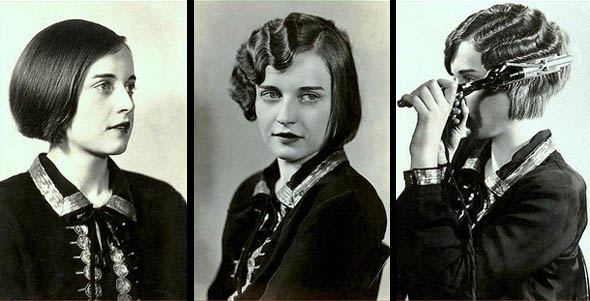
The popular 1920's hairstyle was the finger waves. Most women has short hair styled this way, but it could also been seen on women with long hair. For me, this is a style I would associate with the upper class women because they can afford the hairdressers and time to get it done. However, apparently some lower class women did the same. I imagine if Myrtle was to have her hair like this then she would be very much wearing it in a more messy style, with a scarf around some of her hair to keep the hair in place. I dont imagine her to have the nicest of hair, probably very curly and out of control because it would show a messy appearance and the contrast between her and the pristine Daisy. 
 

Deconstructing Myrtle's Character through Quotes


"All I kept thinking about, over and over was "You can't live forever; you can't live forever!""
- Myrtle Wilson

'Myrtle Wilson'

Since Myrtle is quite obviously below the Buchanan’s class (yet another reason she goes for Tom), Fitzgerald (through Nick) ridicules her for insisting that she is above her husband. He didnt have a lot of positive to say about her:

 "She was in the middle thirties and faintly stout but she carried her surplus flesh sensuously as some women can....She smiled slowly and walk[ed] through her husband as if he were a ghost."
- Nick Carraway's description of Myrtle, Chapter 2.

Proof of Nick's statement in which she treats George like a ghost is this quote here:

‘Throw me down and beat me, you dirty little coward!’ p146

This shows her desperate desire for a strong man to take care of her life. She is begging Wilson to beat her, probably because Tom has done so before, but when she finds out how weak Wilson actually is she is so desperate to be subservient to a man she begs to be beaten.

AMERICAN DREAM:

Myrtles idea of the American Dream is to become a trophy wife. She believes that this is the best life a woman can have at this age. She enjoys belonging to Tom, who constantly refers to her as "my girl". This suggests his ownership over her which she finds flattering that such a high status character want to own her.

BEAUTY:

Myrtle is often describes as a beautiful fool.
Nick describes her to have features that didnt quite fit the ideas of a beautiful woman with
"Her face contained nofacet of gleam of beauty", she has "Rather wide hips" and a "thickish figure for a woman".
He also goes on with many other quotes such as:
"faintly short but she carried her surplus flesh sensuously". The only compliment she receives here is that she is sensuous, which suggests that Tom is only interested in her for sex.
"His wife thats keeping them apart, shes a Catholic".
not only does this suggest that she is easily tricked, by Tom of all people, but it shows that she still believes that one day she and Tom will eventually marry. This shows she is naiive, vulnerable and to put it bluntly, stupid.
"I thought he knew about breeding".
This shows her characters selfishness, lack of respect towards her husband and want for a rich life. With this quote, she is talking about her disappointment with the fact that Wilson never became rich, when she thought that he would. However, it is made clear in the novel that Wilson has never even owned his own suit, which should have been a good sign for Myrtle when realising he wasnt going to be rich. Although this may not seem to come under beauty, I think its important because it suggests that she isnt beautiful on the inside.

MYRTLE REPRESENTING WOMAN:

It is clear that Myrtle see's men as more powerful than her and rather than working her way up the ladder to success (like Gatsby), she see's the only way is to find a rich man to love and marry her.
"A dress suit and patent leather shoes I couldnt keep my eyes off".
This is Myrtle's description of Tom, which shows that she is attracted to his wealth by discussing what he wears and how he looks. This says everything about her relationship with Tom. He is a rich man she desires but only for money, and she is just an object he knows he can have when he wants.
"His white shirt front pressed against my arm".
She is very dominant by men and loves the power that they have over her. In her eyes, they are pristine and perfect, like a pressed white shirt.
"Beat me you coward".
Again, this quote is appropriate when looking at her representation of women. It shows that she needs that strong dominant figure to survive. She asks Wilson to satisfy her need, but he doesnt, not like Tom.

MYRTLE REPRESENTING THE LOWER CLASS:

Myrtle represents lower class with her looks, attitude, brains and being subservient. Here are some quotes that show how she represents the lower class:
"Some of the small scandal magazines of Broadway".
Unlike the people who attend Gatsby's parties, like Daisy, who gossip amongst themselves to find out the latest, Myrtle has to read cheap magazines to find out whats going on.  

"A wreath with a black silk bow for my mothers grave".
Again, this represents class, suggesting her lower status because she has experience death which is something the lower class are familiar with. This is not to say that the upper class dont experience death, but the way Myrtle discusses it shows that the lower class have the harder life.

"Her left breast was swinging loose like a flap".
The breast is a symbol of femininity, so the idea of it being ripped of as she dies could suggest that her femininity is being ripped away from her because of her lower class birth. It also shows the difference between her and Daisy because its a much more vulgar image, which was Fitzgerald's way of showing the lower class.

MYRTLE COMPARED TO DAISY:

There are major obvious differences between Myrtle and Daisy. This is strongly pushed through the book because Fitzgerald was so harsh when it came to writing about the lower class. He made the difference in hierarchy a big thing, but this was a good thing when it came to noticing the difference in woman. Here are some quotes I have found that show the difference between Myrtle and Daisy:

"Dress of cream".
Daisy always wore the colour cream as a sign of purity. Myrtle on the other hand is often seen in vulgar colours like reds and bright pinks. She tries to impersonate her with the style, but never gets the idea for colour right.

"She looked at me and laughed pointlessly".
Daisy's laugh is "absurd" but it is also "charming". This quote from Nick shows another attempt of Myrtle trying to copy Daisy, but failing again.

"The answer...came from Myrtle... was violent and obscene".
Daisy is always described as pure and polite, whereas Myrtle is often describes and vulgar, obscene and crass.

"Daisy Daisy Daisy I'll say it whenever I want to!".
This is a quote from a big scene between Myrtle and Tom. Tom doesnt see Myrtle fit to mention Daisy's name and hits her for doing so. However, there are two occasions that this happens and the second time is much more serious than the first. At the beginning, Tom tells Myrtle to stop calling him "hulking"but she carries on and Tom does nothing. But, when told to not say Daisy, she pays the price for being childish and repeating her name, by getting her nose broken. This shows how she is difference to Daisy because this is the behavior of lower class and clearly how Myrtle behaves with George because she can get away with it.


History of 1920's America

Myrtle's character can be shown through a series of different images. These images aren't just of the character herself, but of the location in which she lives, her styling, the era, the type of woman, comparison between her and other women of the novel, emotions and expressions and much more. Here are a body of images that I have collected which help piece together the background for the character.


1920's America
The novel is set in t 1922. the time of the roaring 20's which was a huge era in the United States. America began to be at its weathiest during the 1920's. It was a time for rich business men who seemed earn healthy amounts of money and always had some spare cash to spend. There were a few differnet types of women in the 1920's. There were the upper class, who were lucky enough to have married into the wealth. There were then the poorer women who tried to be like the rich women, but had their obvious differences such as tanned skin, poor clothing and makeup and of course behavior. These two women represent both Daisy and Myrtle.

FLAPPER GIRLS:
It was also the time of flapper girls. Flappers were a "new breed" of young Western women in the 1920s who wore short skirts, bobbed their hair, listened to jazz, and flaunted their disdain for what was then considered acceptable behavior. Flappers were seen as brash for wearing excessive makeup, drinking, treating sex in a casual manner, smoking, driving automobiles and otherwise flouting social and sexual norms.

Flapper Girls
'The Great Gatsby' 2013 Film Version. 

THE AMERICAN DREAM:
Though all of its action takes place over a mere few months during the summer of 1922 and is set in a circumscribed geographical area in the vicinity of Long Island, New York, The Great Gatsby is a highly symbolic meditation on 1920s America as a whole, in particular the disintegration of the American dream in an era of unprecedented prosperity and material excess. Fitzgerald portrays the 1920s as an era of decayed social and moral values, evidenced in its overarching cynicism, greed, and empty pursuit of pleasure. You can see this through each of the characters by looking at their behaviour. This is something that has interested me when looking into Myrtle because she is looking for the American Dream, and hoping to receive it through Tom. However, the end of her life is too soon coming and the American Dream never truley happens for any of the characters, showing a lot of emotion and pain that the novel actually portrays.

SOCIAL HIERARCHY:
The period between the end of the First World War and the beginning of the Great Depression is sometimes called the "Jazz Age" or the "Roaring Twenties." It was a time of great prosperity and material wealth, but this hedonistic fervor masked underlying social upheaval with class changes being marked among minorities, immigrants, unionized labor and the middle class.
There has always been three obvious levels of class in the world: Upper Class, Middle Class and Lower Class. The Great Gatsby portrays the jump between the Upper Class and the Working Class. Most of the characters are from the Upper Class, living with wealth, money and everything they dream for. However, Myrtle and George are of the Working Class, which is a huge contrast.
George owns a run down garage, struggles to make ends meet and doesnt look lavish or wear expensive clothing. Myrtle is of the same background, but tries to be of the Upper Class, trying to dress expensively and turning her nose up at her poor husband. She has Tom for the money, so she doesnt see the need for George. She just wants to escape and become Daisy, which is her dream.

Carey Mulligan as Daisy Buchanan.
The Great Gatbsy 2013 Film Version.
Status: Upper Class Woman

Isla Fisher as Myrtle Wilson.
The Great Gatsby 2013 Film Version
Status: Working Class

These two shots from the 2013 film version of The Great Gatsby are great to show the difference between class of the two characters. You can tell the status by posture, expressions, styling, colours, hair and makeup.
ROLES OF WOMEN IN SOCIETY:
There were different roles for women in society as I have already explain in the paragraphs above. However, something interesting to know is the difference between women's health which would show their class. Upper Class women were very pale because they never went out in the sunlight. When they did, they were always well covered and shaded. However, working women would have tanned skin because they were always outside. A woman with tanned skinned was a poor woman and this was instantly noticed. Fitzgerald shows a contrast in this though when he introduced Jordan's character. She is tanned because she is a golfer and therefore is always outside. This is interesting though because it then suggests that Jordan is in the middle of Daisy and Myrtle. She also represents the new woman which is a bit of a rebel woman who starts to do everything women never did before. These women are boyish, play sport, work for themselves and earn money, becoming more involved with the role of a man. This shows how the roles of women were beginning to change in the 1920's, as therefore so would the social status.

1920's MUSIC:
The 1920's was the era of the Jazz Age. Jazz music and dance was popular, but then resulted to and end when the Great Depression - when devestating rich and poor economic events disrupted the world. Jazz music is reflected upon with in the Great Gatsby quite regularly, linking with the music of Gatsby's parties and the large brass bands he had playing. It was the music for all social people, but the rich took it to another level when combining it with lavish parties. It was a time to get dressed up, look beautiful and be rich. However, the poor could also live by the life of the jazz age, taking into consideration the roles of Flapper Girls that danced at the parties, but also the idea of the radio and being able to listen to the music even if you couldnt socialise along side it. Listening to the theme of the music does associate you with happiness and wealth, as we can see in this short video of one of Gatsby's parties:

Gatsby's Party Scene - 1974 Film Version

1920's FASHION:
The 1920s is the decade in which fashion entered the modern era. It was the decade in which women first abandoned the more restricting fashions of past years and began to wear more comfortable clothes, such as skirts or trousers. Men also abandoned highly formal daily attire and even began to wear athletic clothing for the first time. The suits men wear today are still based, for the most part, on those worn in the late 1920s. The 1920s are characterized by two distinct periods of fashion. In the early part of the decade, change was slow, as many were reluctant to adopt new styles. From 1925, the public passionately embraced the styles associated with the Roaring Twenties. These styles continue to characterize fashion until early in 1932. This is reflected within the characters of The Great Gatsby - Daisy wore the lavish gowns, Myrtle wore the two piece items, and Jordan wore the more boyish 'new women' style of trouser suits and sports wear.

Upper Class Male Fashion - 'Gangster'.

Working Class Male Fashion

The changing styles within women's fashion.
The makeup and hair of this time period was very memorable.

The 1920s was a time of fabulous fashion and beauty – the iconic looks of the ’20s have been repeated over and over in the years since then. These classic beauty looks are fun to recreate, adding a touch of dramatic Old Hollywood to your modern day routine.

Finger Waving
In the ’20s, the makeup industry was relatively new, and women were just beginning to purchase cosmetics on a regular basis. Dark red lipstick was the hot ticket because it was the only color available. Mascara was far from today’s tube and wand combo — it came in a cake of wax that you added water to in order to create a paste you’d brush onto lashes with a small brush. The red lipstick was applied to line cupids bow of the upper lip - a seductive way of wearing the colour.

1920's Makeup
Cupids Bow Lips


POLITICAL EVENTS IN 1920's:
The 1920's was the end of the WW1. It was a few years after the end, which was actually in 1918. World War I changed America, or at least hastened the pace of change, and what we would say now was certainly for the better. It lead to a changed status for women. The 19th Amendment (adopted in 1920) guaranteed women the right to vote. Men had opposed women’s suffrage in part because they were afraid women would make prohibition their number one priority.  In 1920, men were no longer afraid giving the women the right to vote would lead to prohibition. Status also began to change with what you can wear and who you can talk to, because the country was showing a celebration and seeing a chance to move forward from war. The idea of Tom and Myrtles affair can represent this, because Tom is speaking to a lower class woman and associating with her. The fact that it was changing slowly though is also shown because it was still embarrassing to socialise completely with different class.

Prohibition was around, where alcohol was prohibiting the making, selling, possession, and consumption of alcoholic beverages. Prohibition, the most flouted law in history was repealed in 1933. This is where a lot of people got their money from, bootlegging alcohol, and considering Gatbsy got his money from bootlegging I think its a good link.

A good reference for prohibition and the bootlegging of alcohol is the 2012 film Lawless.
Here is a trailer of the movie:

 Lawless, 2012.
 
SOCIAL AND CULTURAL EVENTS IN 1920's:
 February 5, 1922 - Reader's Digest is founded and the first issue published by Dewitt and Lila Wallace. This is interesting because Myrtle was well known for reading her magazines, and links well considering this is to do with health, wealth etc.

May 20, 1927 - Charles Lindbergh leaves Roosevelt Field, New York on the first non-stop transatlantic flight in history.  He would reach Paris thirty-three and one-half hours later in the Spirit of St. Louis, his aircraft.  A ticker tape parade would be held in New York City after his return on June 13.

October 6, 1927 - The advent of talking pictures emerges. Al Jolson in the Jazz Singer debuts in New York City. Jolson was an American singer, comedian, and actor of Jewish descent.  He was dubbed "The World's Greatest Entertainer, into jazz music which is referenced a lot through The Great Gatsby.

http://americasbesthistory.com/abhtimeline1920.html
I found this website helpful, its a timeline referencing all the events through from 1920-29, a prime time for the novel, which is set in 1922.

LIVING, SOCIAL AND EMPLOYMENT CONDITIONS:

Social Problems:

People who were wealthy in America were extremely rich, but few people shared in this prosperity. Only 5 per cent of the American population owned a third of the wealth, while 42 per cent of the population were living below the poverty line.

Agriculture:

For many American farmers, life in the 1920s was a constant struggle against poverty. During the First World War, farmers had been encouraged to grow as much food as they could. They continued to do this in the 1920s until they had produced more cotton and wheat than they could sell.
As prices dropped, many farmers lived in unhygienic conditions in tin shacks, without electricity or running water. In 1929, when the average monthly income of a skilled manufacturing worker might be $140, farm labourers were earning only $49 a month.

 Industry:

 It was not all boom for American industries. Traditional industries such as coal and textiles did not prosper. In 1929, when the average monthly income of New York bricklayers might be $320, coalminers were earning only $103 a month. Also, during the 1920s, in response to American import tariffs on their products, many other countries put customs duties on American goods, which reduced American exports.

Living Conditions:

Living Conditions in 1920's American went from one extreme to the other. It was a great time to be rich, and when you were, you were able to live in the most extravagant houses with swimming pools, marble floors, plenty of rooms and of course, a whole neighbour hood of the same thing. The city of New York was made for the rich and the up and coming, becoming well lit and exciting.

1920's American Mansion

1920's American Mansion

Mansion Staircase

Interior of the Rich

Upper Class Transport

Upper Class Transport, New York City

Upper Class Lavish Street Parties, New York City

Upper Class Parties
However, you could also be a part of the other extreme. For these people, it wasnt the lavish life at all. It was the life of wooden huts and houses, dusty roads and smokey skies. Pollution from the city itself invaded these small valleys and towns surrounding the rich, making the poor the main sufferers. Things were damp, smelly and cold. Broken homes, run down businesses, vandalisd billboards and the aftermath of American gangsters in the prohibition.


Myrtle Wilson

MYRTLE WILSON


'mid thirties, faintly stout, thickset figure, face isn't beautiful, however she has vitality, is continually smouldering and carries herself very sensuously'.
 - Nick Carrway's Description of Myrtle
After studying the text and considering the characters, the character I want to focus on for this project is Myrtle Wilson. Myrtle is quite a mysterious character, but its her doing in the novel that is the shape of things to come. This is why I chose to look into herc character, because she is definitely the dark horse.


The story is Myrtles character is quite sad. She is married to George Wilson, the owner of a run down auto shop on the edge of the Valley of Ashes. Her husband is lifeless and exhausted, struggling to make ends meet, but his love her Myrtle is unconditional. Myrtle on the other hand takes what shes got for granted. She is constantly looking for a way to improve her situation, looking for a way out of the lower class life and a way in with the rich and famous. She is having an affair with Tom, but Tom treats her more of an object rather than a desire. There is a scene in the novel where Tom takes Nick to the hotel Myrtle is at. Myrtle mentions Daisy's name, and Tom hits her suggesting that Myrtle has to right to mention his wives name. A lot of emotion can be felt towards Myrtle throughout the novel such as sympathy, hatred and anger. Her character doesnt grow in ways that other characters do, but some would say she gets what she deserves. The sympathy on the other hand should go towards her husband. However, it would appear that anyone in the novel who deserves sympathy manages to change for the worse and commit some sort of disaster.


I have brainstormed some facts about Myrtle. These are the things that make up her character and what I think the audience should recognise about her.


Character List


Character List

The Great Gatsby doesnt just have one or two main characters, like a lot of novels do. Instead, every character in the book can be classed as a main, as they each hold their own significance to the novel. Of course, it can be argued that Gatsby is the main character as he is the main protagonist. He is the title character of the novel, but his story wouldnt be right without the other characters involved.

Here is a list of the F. Scott Fitzgeralds characters:

Nick Carraway - The Narrator of the novel and Daisy Buchanan's cousin. The novel is told entirely though Nick's eyes, his thoughts and perceptions shape the story.

Jay Gatsby - The title character and the main protagonsit of the novel. He is a mysterious character, known for his lavish parties, love for Daisy and achievement of wealth. However, Gatsby has a dark criminal background that the others do not all know about.


Daisy Buchanan - Nick's cousin and the woman that Gatsby loves. She never waited for Gatsby to come back from war, although this is what she promised to do. Instead, she married Tom, and they live across from Gatsby in the fashionable East Egg. Shes a superficial character; sarcastic, cynical and beautiful.

Tom Buchanan - Daisy's immensely wealthy husband. He is powerful and comes from a strong, wealthy background and this is thoroughly portrayed throughout his character. Hes arrogant and a bully with no attitudes towards anything that he makes others respect. He has no moral qualms about his affair with his mistress Myrtle, but when he suspects his wife is having an affair he is outraged and forces confrontation.

Jordan Baker - Daisy's friend and a professional golfer. Jordan is a bit of a secret character. She represents the idea of the "New Woman" of the 1920's - boyish and self-centered. She is a beautiful woman, and Nick's lover during the course of the novel. However, she is dishonest and continually known to bend the truth.


Myrtle Wilson - Tom's mistress. Shes unhappy with her marriage to her unsuccessful and lifeless husband. She lives in the Valley of the Ashes, the run down area away from East Egg. Myrtle desires the life of the upper class and is constantly looking for a way to improve her situation. Unfortunately for her she chooses Tom, who treats her as more of an object as opposed to a desire.

George Wilson - Myrtles husband who owns a run down auto shop at the edge of the Valley of Ashes. He is lifeless and exhausted, but has overwhelming love for his wife. His devastation for her affair with Tom is the backbone for the end of the novel. Tom and Gatsby can be comparable, in the sense that they both love women who are devoted to Tom.